FACTS 
ABOUT :

Thermal Oil Heaters             

Thermal Fluid Heating Systems

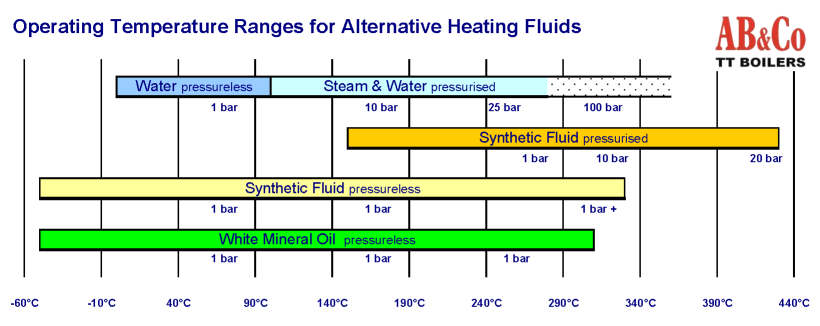
Both water and steam are used as heat carriers in process heating systems. But at temperatures above 100°C, water and steam requires a corresponding higher operating pressure. In industrial heating this high temperature level is often a must in order to achieve the necessary high output of the process.

When establishing the heating system with water and steam, you must deal with systems and components designed for very high pressures and consequently demands for special considerations in regards to safety issues.

This means large dimensions and weights, extensive safety procedures, approvals from authorities and a lot of extra costs.

In thermal oil heaters, a special oil-based thermal fluid is used as the heat carrier - instead of water or steam. This thermal fluid (or heat transfer fluid) operates at atmospheric pressure all the way up to 300°C. Comparing this to water and steam, it would require a corresponding steam or water pressure of above 85 bar to obtain the temperature of 300°C. At higher temperature than 320-340°C, the thermal fluid too must be pressurised (see below), however only moderate overpressure compared to water and steam (which require 150 - 170 bar).

In the principle the thermal fluid works as any other heating fluid, it is heated and it is cooled when passing through the system, - just like low temperature domestic heating systems.

Link to TT BOILERS Thermal Oil Boilers

Understanding the thermal oil heating system is not that difficult. Only the operating temperature is much higher than water circulating system. On the other hand this means that both the system and the components becomes quite different in design and special features.

In other words, the design of thermal oil heating systems and the parts hereof required not only special skilled designers and engineers - it also require these persons having many solid experiences in the many different challenges that always arise in such installations.

The thermal oil heater units too must be designed for operating with the special thermal fluid developed for high temperature application. Still oil is used, and oil is per definition potential flammable, dangerous and even fatal if not

dealt with the correct way - and this issue is very important to keep in mind throughout the design and installation stage.

Ensuring low thermal fluid film temperature is essential in designing the thermal oil heaters. The correct design prevent cracking of the fluid and it means that thermal oil boilers are basically quite different in design compared to steam/water boilers. For instance, where water heaters and steam boilers can be heated using a pool of hot water, the thermal fluid in contrary must be heated by forced circulation ensuring high velocity of the thermal fluid at all time.

It is recommended that potential users of a thermal oil heating systems make special efforts in order to ensure that the chosen supplier of the thermal oil system is both skilled and experienced in these fields.

Link to TT BOILERS Thermal Oil Boilers

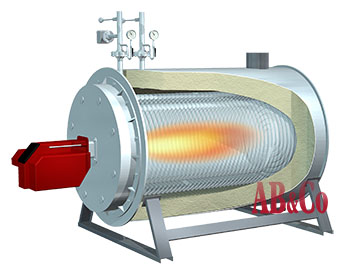
Horizontal Type
Thermal Oil Heater with forced circulation.

Link to TT BOILERS Thermal Oil Boilers

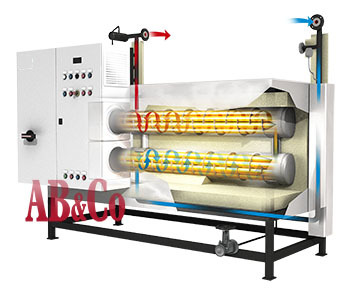
Vertical Type
Complete Thermal Oil Heater System


Summarising the above, there are several advantages by using thermal oil compare to e.g. steam systems that should be considered - especially for new installation (it is often very complicated to use an old steam system for thermal fluid.

The reason why thermal oil heating becomes ever more used, are related to these substantial general features / advantages :
 

  • High temperatures up to 300°C at atmospheric pressure

  • Choice-free set-points of the outgoing thermal oil temperature

  • Supreme part-load operations without compromising heating quality

  • No equipment for pre-treatment, no chemicals / additives etc. 

  • No heat loss due to hot condensate and flash steam

  • No risk of corrosion in the heater and circuit

  • Can be used as for both cooling below 0°C and above 100°C

  • Low maintenance costs

  •   (no dynamic influences, no leaking)
  • Quiet in operation (no steam stroke and flash steam noise)

  • Easy to operate ( does not require boiler certified staff etc.)

  • Fluid sample analyzing that determine the condition of the system

  • No risk of freezing damages in cold regions.


ProcessHeating.biz

recommends these links for more technical details :
 

>> Thermal Oil versus Steam <<

>> Details on Thermal Oil Systems <<

>> Details on Thermal Oil Heaters <<

>> About ProcessHeating.biz <<


TOOLS            
for thermal engineers         


   Steam vs.
Thermal Fluid     
 
    Properties
Steam/Water      
 
   Properties
White Mineral Oil